
The automotive industry relies heavily on precision manufacturing, and automotive mold development is one of the most critical stages in producing high-quality vehicle components. Whether manufacturing body panels, structural parts, or chassis components, well-designed molds ensure consistent quality, production efficiency, and cost control.
For automotive OEMs and Tier 1 suppliers, choosing the right mold manufacturer can significantly shorten product development cycles and improve production performance. This article explains the complete automotive mold development process—from product analysis and mold design to manufacturing, testing, and mass production.
I. What Is Automotive Mold Development?
Automotive mold development is the process of designing and manufacturing specialized tooling used to produce automotive components. These molds are essential for forming sheet metal, plastic, and aluminum parts with high precision and repeatability.
The most common automotive molds include:
1. Stamping Dies
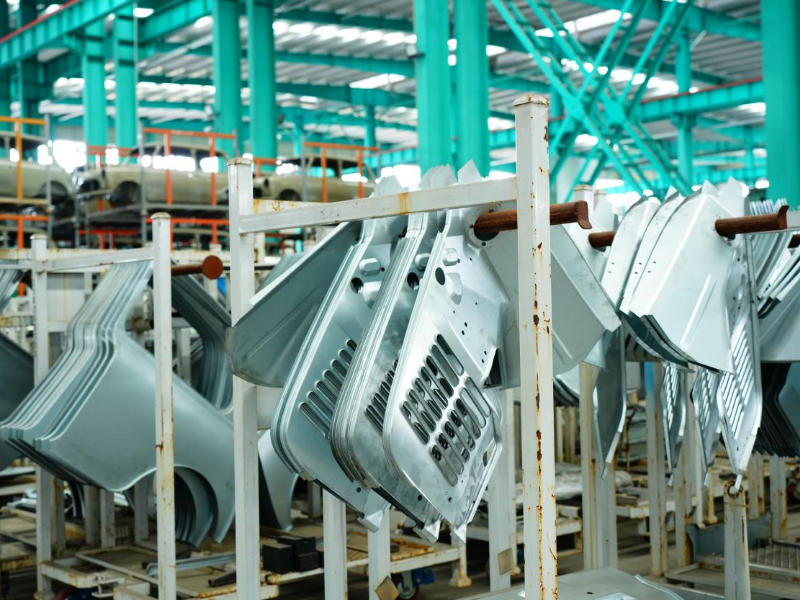
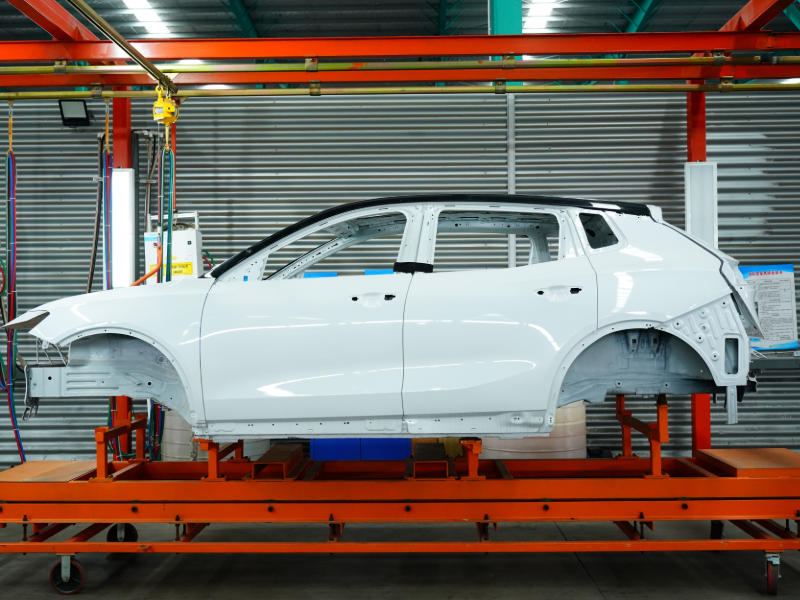
Stamping dies are used to manufacture body panels such as doors, hoods, roofs, fenders, and side panels. They play a vital role in sheet metal forming and are among the most widely used molds in automotive production.
2. Injection and Die Casting Molds
Injection molds produce plastic components such as bumpers, dashboards, and interior trim, while die casting molds manufacture lightweight aluminum parts including battery housings and motor casings for electric vehicles.
3. Checking Fixtures
Checking fixtures and welding fixtures are used for dimensional inspection, positioning, and assembly verification, ensuring that every component meets strict quality requirements before production.
II. Key Preparations Before Mold Development
Successful automotive mold development begins long before machining starts. Thorough engineering analysis helps identify potential manufacturing issues early, reducing both development time and costs.
1. Product and DFM Analysis
Engineers first review the customer’s CAD models, engineering drawings, material specifications, and tolerance requirements.
A Design for Manufacturability (DFM) analysis evaluates factors such as:
- Material thickness
- Drawing depth
- Undercuts
- Draft angles
- Springback risks
- Potential cracking or wrinkling
This step ensures that the product can be manufactured efficiently without unnecessary tooling modifications.
2. CAE Simulation
Computer-Aided Engineering (CAE) has become a standard tool in modern mold development.
Engineers perform simulations to predict:
- Material flow
- Forming quality
- Springback
- Cracking
- Wrinkling
Virtual analysis reduces trial-and-error during mold testing and improves first-pass success rates.
3. Process Planning
Based on simulation results, engineers determine the complete manufacturing process.
A typical body panel may require several operations, including blanking, drawing, trimming, piercing, flanging, and restriking. Each operation usually requires its own dedicated die to achieve the desired accuracy and surface quality.
III. Automotive Mold Design Process
Once the manufacturing process has been finalized, engineers begin designing the mold.
1. Mold Structure Design
A complete stamping die generally consists of:
- Upper and lower die sets
- Punches and die cavities
- Blank holders
- Guide pillars and bushings
- Nitrogen gas springs
- Ejection systems
- Safety mechanisms
The design must provide sufficient strength, durability, and precision while remaining easy to maintain during long-term production.
2. Standard Component Selection
Using standardized components improves manufacturing efficiency and reduces maintenance costs.
Common standard parts include guide pillars, punches, locating pins, gas springs, fasteners, and linear guide systems. Selecting reliable standard components also shortens procurement time and simplifies future repairs.
3. 3D Design Verification
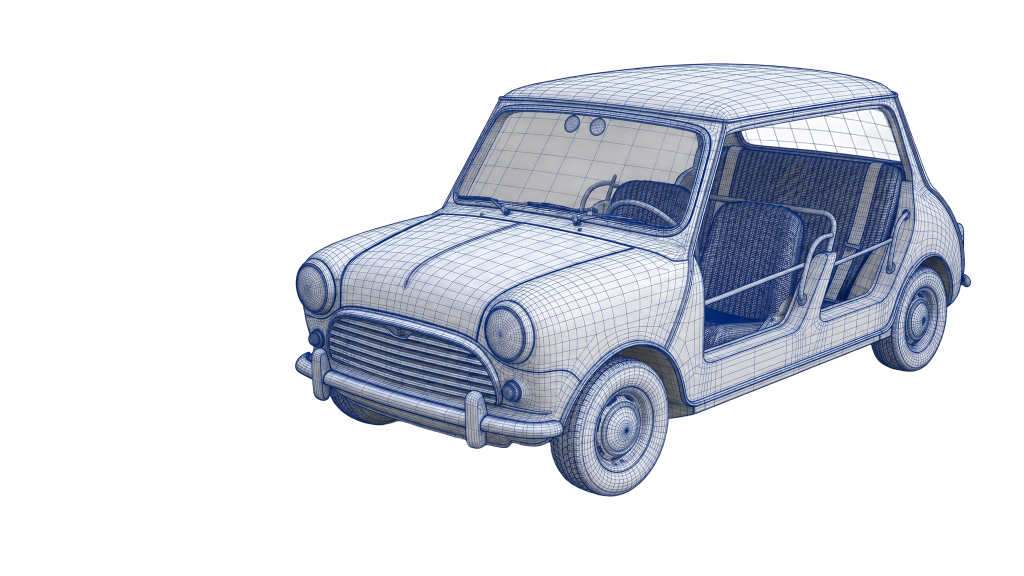
Modern automotive mold manufacturers use software such as CATIA, Siemens NX, AutoForm, and SolidWorks to create detailed 3D models.
Before manufacturing begins, engineers perform interference checks, motion simulations, and assembly verification to ensure that every component functions correctly.
IV. Automotive Mold Manufacturing Process
After the design has been approved, production moves into the machining stage.
1. Material Preparation
High-quality tool steels such as SKD11, DC53, H13, P20, and 718H are commonly selected according to the required hardness, wear resistance, and service life.
Different mold components may require different materials to achieve the best balance between durability and machining performance.
2. Precision Machining
Large automotive molds are manufactured using advanced CNC machining centers capable of producing highly accurate surfaces and complex geometries.
Additional processes such as Electrical Discharge Machining (EDM) and Wire EDM are used for intricate cavities, precision inserts, and detailed features that cannot be machined using conventional cutting methods.
After machining, critical components undergo heat treatment to improve hardness, wear resistance, and dimensional stability, ensuring long service life under continuous production conditions.
V. Mold Assembly and Tryout
After manufacturing, all mold components are assembled and carefully inspected.
1. Mold Assembly
Engineers install guide systems, punches, die inserts, gas springs, and other components while ensuring accurate alignment and smooth movement.
Proper assembly is essential for achieving consistent forming quality during production.
2. Mold Tryout
Mold tryout is one of the most important stages of automotive mold development.
Trial production is carried out to evaluate:
- Dimensional accuracy
- Surface quality
- Springback
- Wrinkling
- Cracking
If defects are detected, engineers modify the mold until the required quality standards are achieved. Large automotive stamping dies often require multiple tryout rounds before approval.
3. Dimensional Inspection
Coordinate Measuring Machines (CMMs) are widely used to inspect finished parts.
Inspection results are compared with GD&T specifications to verify dimensional accuracy and ensure that all customer requirements are satisfied.
VI. Preparing for Mass Production
Once the mold passes all inspections and validation tests, it is approved for production.
Manufacturers evaluate three key factors:
1. Product Quality
Every stamped component must meet requirements for dimensional accuracy, surface finish, structural integrity, and overall appearance.
2. Production Efficiency
Automotive production requires stable cycle times and reliable automation. A qualified mold should consistently deliver high output while minimizing downtime.
3. Mold Service Life
Automotive stamping dies are designed to withstand hundreds of thousands or even millions of production cycles. Routine maintenance and timely replacement of wear parts help maximize mold longevity and reduce operating costs.
VII. Common Challenges in Automotive Mold Development
Although modern technologies have greatly improved mold manufacturing, several challenges remain.
1. Springback Control
Advanced high-strength steel and aluminum alloys tend to spring back after forming, affecting dimensional accuracy. Engineers compensate for this through simulation and mold optimization.
2. Forming Defects
Cracking, wrinkling, and uneven material flow may occur if tooling design or process parameters are not optimized. Continuous engineering improvements help eliminate these defects.
3. Shorter Development Cycles
The rapid growth of electric vehicles has significantly shortened product development timelines. Digital engineering, CAE analysis, and automated machining have become essential tools for meeting tight project schedules.
VIII. Future Trends in Automotive Mold Development
The future of automotive mold manufacturing is becoming increasingly digital and intelligent.
Manufacturers are investing in digital twins, automated machining, robotic production lines, online quality inspection, and smart factory management systems to improve efficiency and reduce costs.
At the same time, the growing use of lightweight materials such as aluminum alloys, advanced high-strength steel, and composite materials is driving the development of new forming technologies and more advanced tooling solutions.
Companies that embrace intelligent manufacturing and digital engineering will be better positioned to meet the evolving demands of the global automotive industry.
Conclusion
Automotive mold development is a comprehensive engineering process that combines product design, process planning, simulation, mold design, precision machining, testing, and production validation. Every stage directly influences product quality, manufacturing efficiency, and overall project success.
For automotive manufacturers and suppliers, working with an experienced mold development partner ensures faster product launches, lower production costs, and more reliable manufacturing performance. As vehicle technologies continue to evolve, advanced automotive mold development will remain the foundation of efficient, high-quality automotive manufacturing.
Website: www.aotubody.com
Email: vtgbody@gmail.com
WhatsApp: +1(213)7731289