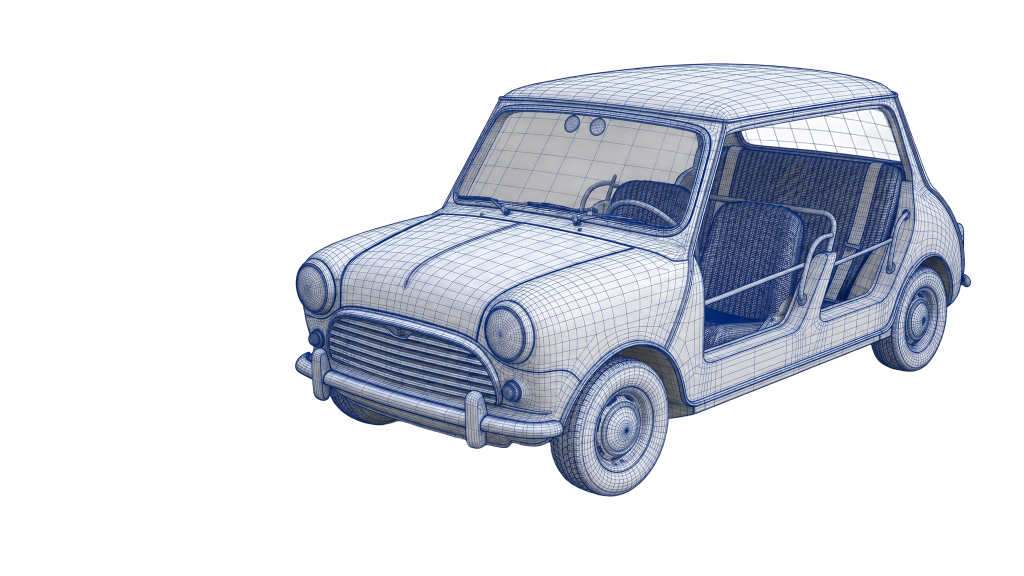

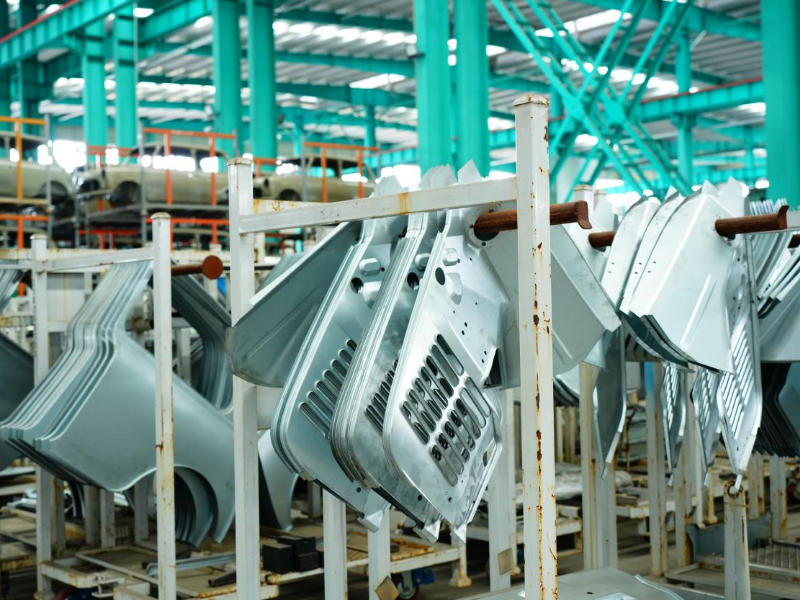
A large number of vehicle body components are manufactured through metal stamping, including door outer panels, fenders, hoods, roofs, floor panels, wheel housings, and various structural parts. Automotive stamped parts must meet dimensional and surface-quality requirements while also providing the necessary strength, stiffness, weldability, and assembly consistency.
So, how are automotive stamped parts manufactured? From product design to mass production, the process normally involves forming analysis, process planning, die development, material preparation, stamping, and quality inspection. A deviation at any stage may result in cracking, wrinkling, excessive springback, or dimensional inaccuracies.
I. What Are Automotive Stamped Parts?
Automotive stamped parts are metal components produced by using a press and stamping dies to apply force to sheet metal. The applied force causes the material to separate or undergo plastic deformation, creating a component with a specific shape, size, and performance.
Unlike machining, which obtains the required shape by removing material, stamping primarily uses the plastic deformation of the sheet itself. The material is drawn, bent, flanged, or formed into the required geometry.
Automotive stamping offers high production efficiency, good material utilization, and consistent dimensions, making it particularly suitable for mass-producing vehicle components.
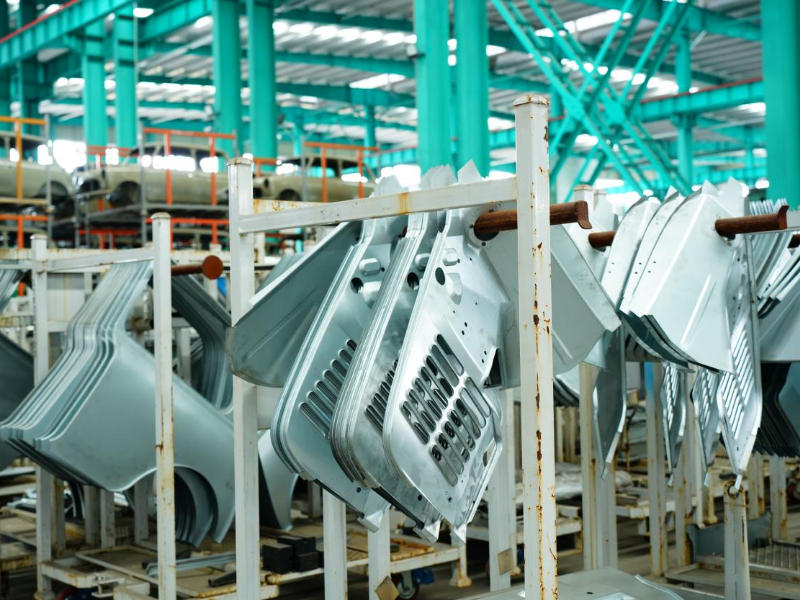
Common automotive stamped parts include:
- Door, hood, and trunk lid inner and outer panels
- Roof panels, fenders, body sides, and floor panels
- Longitudinal members, crossmembers, pillar reinforcements, and connectors
- Seat brackets, battery trays, and chassis structural components
- Small brackets, reinforcement parts, and mounting plates
Different components require different stamping operations and die structures depending on their geometry, material thickness, and performance requirements.
II. What Preparations Are Required Before Automotive Stamping?
1. Product Structure and Formability Analysis
Before stamping dies are manufactured, engineers must analyze the component’s three-dimensional data, material grade, sheet thickness, dimensional tolerances, and surface-quality requirements. They must also determine whether the component can be formed reliably through stamping.
If a part contains excessively deep-drawn areas, very small corner radii, or complex surface transitions, the sheet metal may experience local thinning, cracking, or wrinkling during forming.
Engineers generally use a combination of practical forming experience and finite element simulation to evaluate material flow, thickness variation, strain distribution, and springback tendencies.

2. Stamping Process Planning
The required manufacturing operations are determined according to the component’s structure. Complex automotive body panels generally cannot be manufactured in a single press operation and must pass through several forming stages.
| Operation | Main Function |
| Leveler | From steel coils to formed body panels |
| Drawing | Forming a flat blank into a three-dimensional component |
| Trimming | Removing excess material after drawing |
| Piercing | Producing mounting, locating, and process holes |
| Flanging | Creating joining, welding, or assembly edges |
| Restraining and calibration | Correcting local geometry and improving dimensional accuracy |
More operations do not necessarily result in better quality. Effective process planning must balance formability, die costs, production cycle time, and material utilization.
3. Stamping Die Development
Stamping dies directly determine the shape and dimensions of the finished component. An automotive stamping die normally consists of an upper die, lower die, blank holder, guiding mechanisms, locating components, and trimming or piercing sections.
After the die design is completed, the tooling must be machined, assembled, debugged, and tested. During the die-tryout stage, actual production material is stamped and inspected.
The die surfaces, clearances, and blank-holding conditions are then adjusted according to the inspection results. This process continues until the component meets the required dimensional and surface-quality standards.
III. Main Manufacturing Process for Automotive Stamped Parts
1. Raw Material Inspection
Common materials used in automotive stamping include low-carbon steel, high-strength steel, advanced high-strength steel, aluminum alloy, and stainless steel.
Before entering production, the material must be checked for its grade, thickness, surface condition, and mechanical properties.
Material characteristics such as yield strength, tensile strength, elongation, and anisotropy directly affect forming results. Even when the same material grade is used, substantial variations in mechanical properties may lead to cracking, inconsistent springback, or dimensional instability.
2. Uncoiling, Leveling, and Blanking
Metal coils are first uncoiled and passed through leveling equipment to remove noticeable curvature and waviness. The material is then cut into blanks with the required shape and dimensions.
A properly designed blank profile improves material flow during drawing and helps reduce unnecessary scrap. For complex shapes, prototypes, or low-volume production projects, laser cutting may also be used to prepare the blanks.
3. Deep Drawing and Forming
Deep drawing is a critical operation in the production of large automotive body panels. During this process, the blank is positioned on the die, and the blank holder controls material flow. The press then brings the punch and die together, gradually transforming the flat sheet into a three-dimensional component.
If the blank-holding force is too low, the sheet may wrinkle. If it is too high, material flow may be restricted, increasing the risk of excessive thinning or cracking.
Die clearance, blank-holding force, lubrication, and blank positioning must therefore be carefully controlled.
4. Trimming, Piercing, and Flanging
After drawing, excess material normally remains around the edge of the component and must be removed with a trimming die. Mounting holes, locating holes, and functional openings are then produced according to the product design.
Some components also require flanging to create stable edges for welding, joining, or final assembly. If the hole positions or flange angles are inaccurate, they may affect subsequent body welding and component installation.
5. Restraining and Springback Compensation
After the forming load is removed, sheet metal undergoes a certain amount of elastic recovery. This phenomenon is known as springback. It is often more noticeable in components made from high-strength steel and certain aluminum alloys.
To control the final dimensions, engineers may modify the die surfaces, optimize the forming sequence, add a restriking operation, or introduce an appropriate amount of overbending compensation.
The required compensation should be determined through forming simulations, die trials, and actual dimensional measurements.
IV. How Is the Quality of Automotive Stamped Parts Inspected?
After stamping, each component must be inspected for appearance, dimensions, and material condition.
Visual inspection focuses on defects such as:
- Cracks
- Wrinkles
- Scratches
- Dents
- Excessive burrs
- Surface waviness
Exterior panels such as door skins and hoods require particularly careful surface inspection. Even a minor imperfection may become more visible after painting.
Dimensional inspection can be performed using checking fixtures, calipers, height gauges, or coordinate measuring machines. Inspectors evaluate hole positions, component profiles, curved surfaces, and assembly reference points.
For safety-related or critical structural parts, manufacturers may also inspect material thinning, hardness, weldability, and other relevant properties.
Quality control during production normally includes first-piece inspection, periodic inspection, and last-piece confirmation. These checks help identify variations caused by die wear, blank misalignment, or changes in equipment condition.
V. Common Automotive Stamping Defects and Their Causes
Cracking is commonly associated with insufficient material elongation, excessive local stretching, small die radii, or excessive blank-holding force.
Wrinkling may be caused by insufficient blank-holding force, uncontrolled material flow, or an unsuitable die structure.
Springback is primarily influenced by material strength, component geometry, and residual forming stress. Excessive burrs may indicate worn cutting edges or incorrect cutting clearance, while surface scratches may be associated with poor die-surface conditions, foreign particles, or inadequate lubrication.
These problems cannot always be solved by simply adjusting press parameters. Materials, tooling, process design, lubrication, and equipment conditions must be evaluated together.
VI. From Stamped Parts to Body Assemblies
The manufacturing process does not necessarily end when stamping is completed. Many stamped parts must subsequently undergo cleaning, welding, riveting, adhesive bonding, or surface treatment before being assembled into doors, floor structures, body sides, or complete vehicle bodies.
The hole positions, edge profiles, and locating surfaces of stamped components must align accurately with welding fixtures and adjacent parts.
If dimensional stability is not properly controlled during stamping, deviations may accumulate throughout the assembly process. This can affect weld positions, body gaps, alignment, and final vehicle assembly.
Professional automotive stamping therefore requires product design, die development, stamping production, quality inspection, and downstream assembly to be managed as an integrated manufacturing system.
Conclusion
The production of an automotive stamped part may appear to involve only a single press stroke. In reality, it depends on material engineering, forming analysis, die design, precision machining, process control, and quality inspection.
Every stage—from a flat metal sheet to a dimensionally stable automotive component—affects the quality of the final product.
Only through appropriate material selection, scientific stamping-process design, accurate die manufacturing, and a comprehensive inspection system can manufacturers consistently produce automotive stamped parts that meet the requirements of body welding and final vehicle assembly.
Website: www.aotubody.com
Email: vtgbody@gmail.com
Whatsapp: +1(213)7731289